> ## Documentation Index
> Fetch the complete documentation index at: https://docs.krait.io/llms.txt
> Use this file to discover all available pages before exploring further.
# AI Autofix
> Krait automatically generates pull requests to fix vulnerabilities in your code, so your team can review and merge a ready-made fix instead of writing one from scratch.
## Overview
AI Autofix connects Krait to your version control system to create fix pull requests directly from security findings. Krait shows you the recommended fix before any PR is created, and for dependency vulnerabilities you choose the exact version to upgrade to. Once you are satisfied, Krait opens the PR and your team reviews and merges it like any other code change.
Autofix is available for two categories of findings:
* **Dependency vulnerabilities** detected during code scanning
* **API Inventory vulnerabilities** detected during deep scanning
## Setup
Autofix requires a one-time installation of the Krait AutoFix app on your version control system. This gives Krait permission to open pull requests on your behalf.
Navigate to **Integrations** and select your version control system — either **GitHub** or **GitLab**.
Locate the AutoFix app for your platform and click to install it.
* For GitHub: **GitHub AutoFix**
* For GitLab: **GitLab AutoFix**
Review and approve the requested permissions. These allow Krait to open pull requests and merge requests on your connected repositories.
You only need to complete this setup once per workspace. All workspace members can use Autofix after the app is installed.
## Finding Autofixable Issues
There are two places to find findings that are eligible for Autofix.
**Autofixable page**
A dedicated page that lists every finding across all your resources that Krait can automatically fix. Use this as your starting point for bulk remediation.
**Individual finding page**
Open any finding and go to the **Recommended Fixes** tab. If an automated fix is available, it will appear here along with a preview of the proposed change before you create the PR.
## Dependency Autofix
When Krait detects a vulnerable dependency, it identifies available patched versions and lets you choose which one to upgrade to before creating the PR.
Navigate to the vulnerable dependency finding and select the **Recommended Fixes** tab.
Krait lists the available patched versions of the package. Select the version you want to upgrade to.
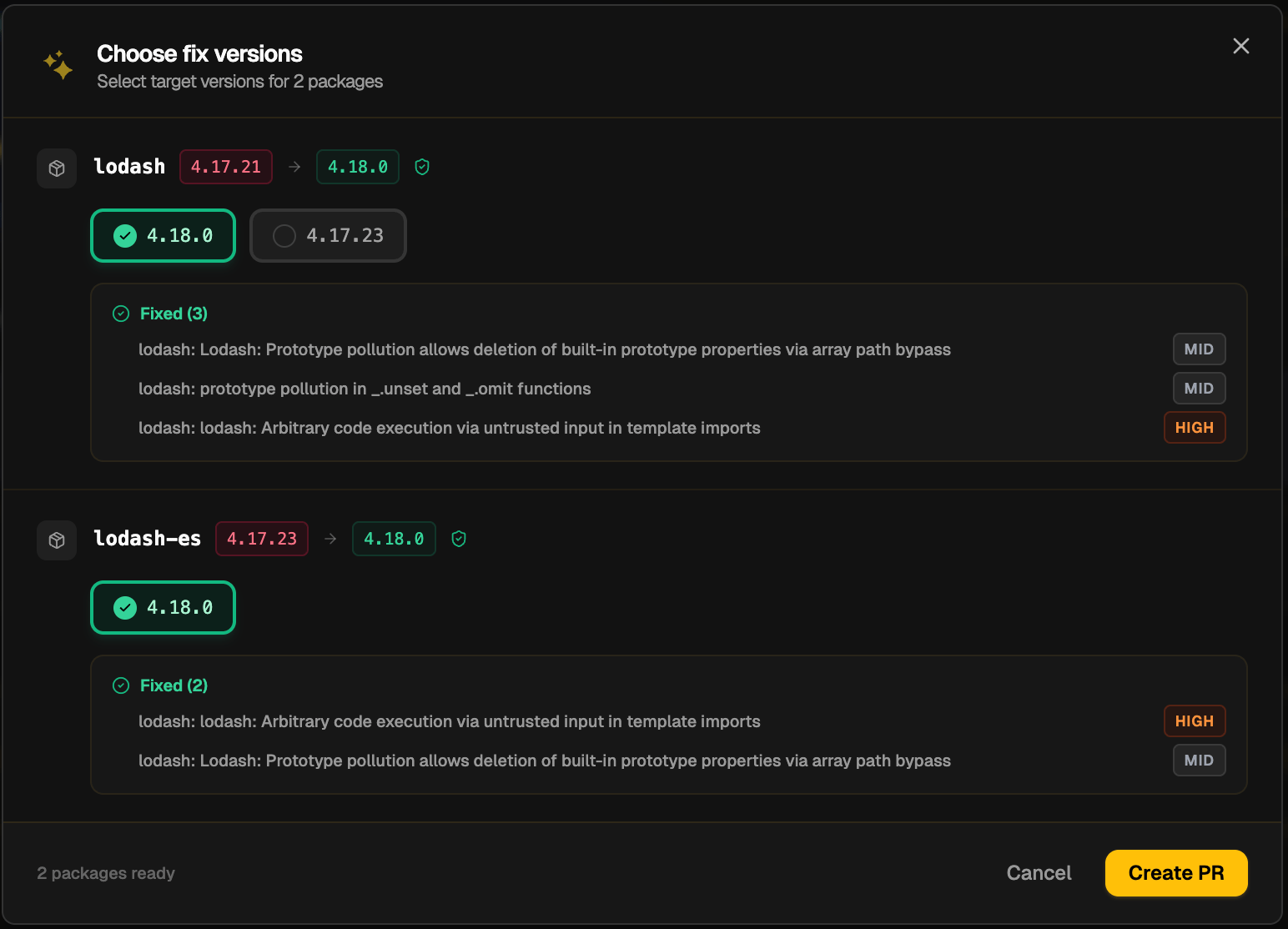 Review the proposed change and click **Create Fix PR**. Krait opens a pull request on your connected repository with the dependency update applied.
Your team reviews the PR in GitHub or GitLab and merges it to apply the fix.
## API Inventory Autofix
For vulnerabilities discovered through the API Inventory, Krait generates a code-level fix based on the specific issue found in your endpoint logic.
Navigate to the API Inventory finding and select the **Recommended Fixes** tab.
Krait displays the proposed code change. Review it to confirm it addresses the issue correctly.
Review the proposed change and click **Create Fix PR**. Krait opens a pull request on your connected repository with the dependency update applied.
Your team reviews the PR in GitHub or GitLab and merges it to apply the fix.
## API Inventory Autofix
For vulnerabilities discovered through the API Inventory, Krait generates a code-level fix based on the specific issue found in your endpoint logic.
Navigate to the API Inventory finding and select the **Recommended Fixes** tab.
Krait displays the proposed code change. Review it to confirm it addresses the issue correctly.
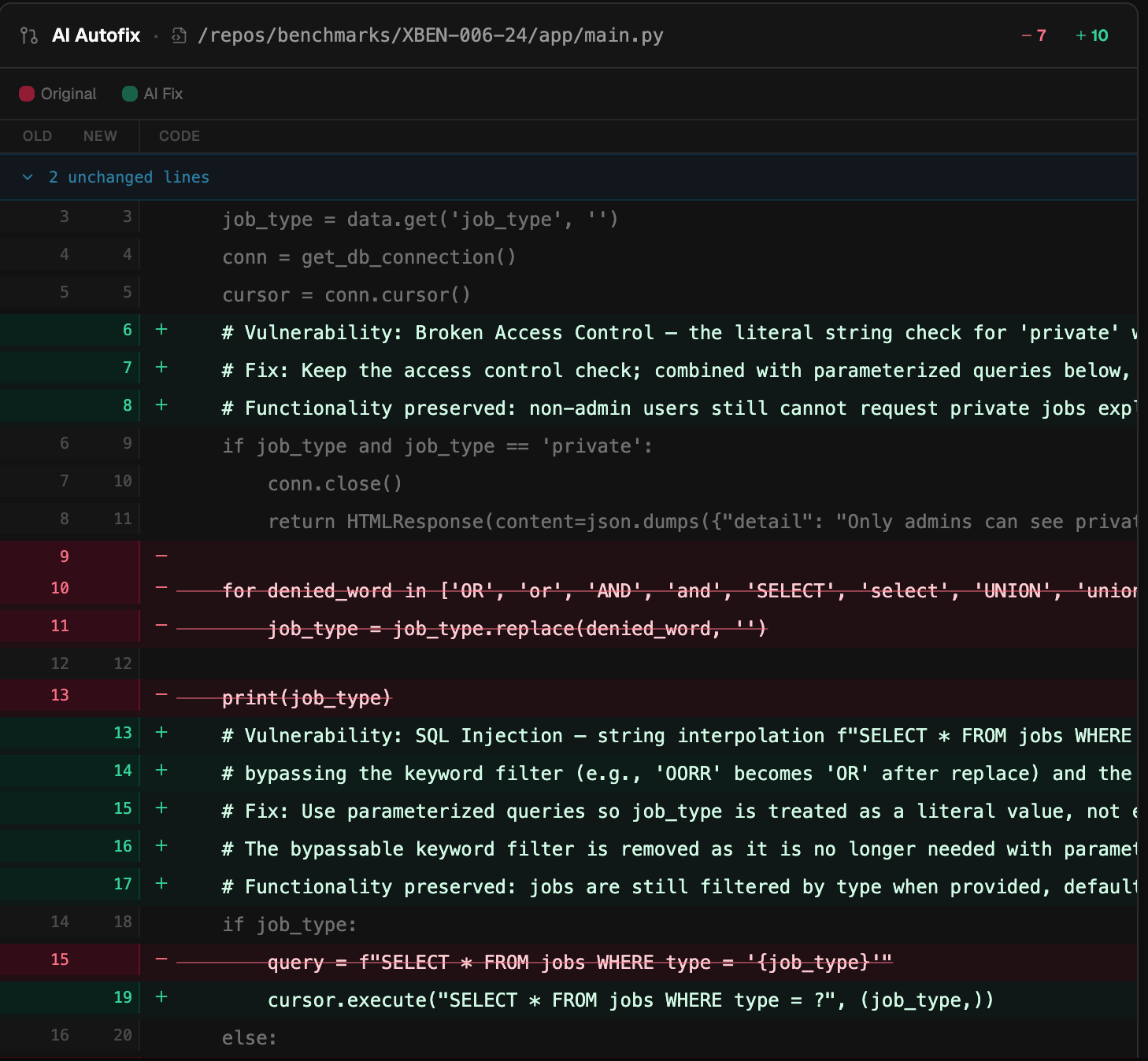 Click **Create Fix PR**. Krait opens a pull request on your connected repository with the fix applied to the relevant file.
Your team reviews the PR in GitHub or GitLab and merges it to apply the fix.
Click **Create Fix PR**. Krait opens a pull request on your connected repository with the fix applied to the relevant file.
Your team reviews the PR in GitHub or GitLab and merges it to apply the fix.