

Overview
Krait’s API Inventory is the foundation of the platform, working the moment you connect a repository. Instead of relying on traffic, Swagger files, or manual documentation, Krait derives your entire API surface directly from your source code. This makes the inventory a living reflection of your application, always one commit away from reality.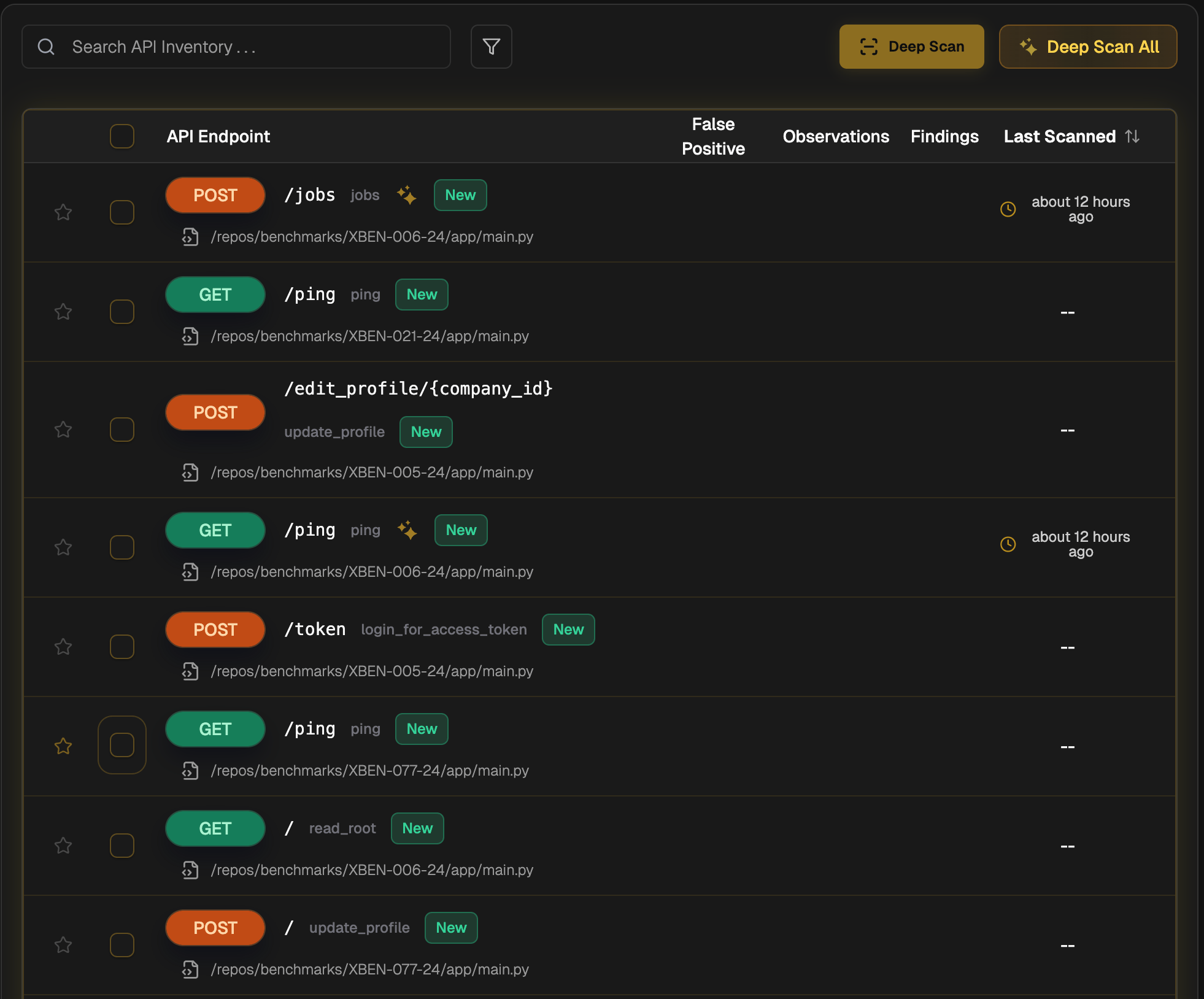
How it works
When a scan begins, Krait reads your controllers, routers, middleware chains, validation layers, and underlying service functions. Supported frameworks provide a predictable structure that Krait interprets to reconstruct both the externally visible routes and the internal execution paths they rely on.Supported frameworks
FastAPI
Spring
ASP.NET
Laravel
Express
Flask
Django
Supported languages
Java
Python
PHP
Python-pyright
JavaScript
TypeScript
C#
What you get
The result is a complete, code-derived map of your API. Every endpoint is annotated with:- HTTP method
- Route pattern
- Handler function
- Middleware chain
- Return types
- Potential status codes
- Relevant data structures
Change tracking
Krait’s inventory system tracks evolution over time. When a route changes, Krait automatically highlights it:Route updated
Route updated
Applied when the signature shifts, middleware is added, or handler logic changes
New endpoint
New endpoint
Newly added endpoints receive a “new” tag until reviewed